Singapore has two main routes to buying refurbished tech: scrolling Carousell for a private listing, or buying from a certified retailer that grades and inspects every device before it goes on sale. Both can get you a working phone or laptop for less than retail. They just get you there very differently — and the gap between them matters more than most buyers realise until something goes wrong.
Here's how the two actually compare, and how to decide which one fits what you're buying.
What you get on Carousell (pros and cons)
Carousell's biggest advantage is price. Because you're buying directly from an individual with no retailer markup, listings can undercut certified sellers significantly — and the sheer volume of listings means more choice across models, storage sizes, and price points than any single retailer can stock.
The trade-off is that everything about the transaction depends on the seller's honesty. There's no standardised grading — "like new" means whatever the seller decides it means. Battery health, screen condition, and IMEI status are only as accurate as what the seller chooses to disclose, and there's rarely a structured way to verify any of it before you hand over cash.
If the phone doesn't match the listing once you get it home, your recourse is a conversation with an individual, not a company with a documented process. For a confident buyer who knows exactly what to check and is comfortable with that risk, Carousell can work out well. For anyone who wants certainty going in, it's a harder route.
What you get from a certified retailer
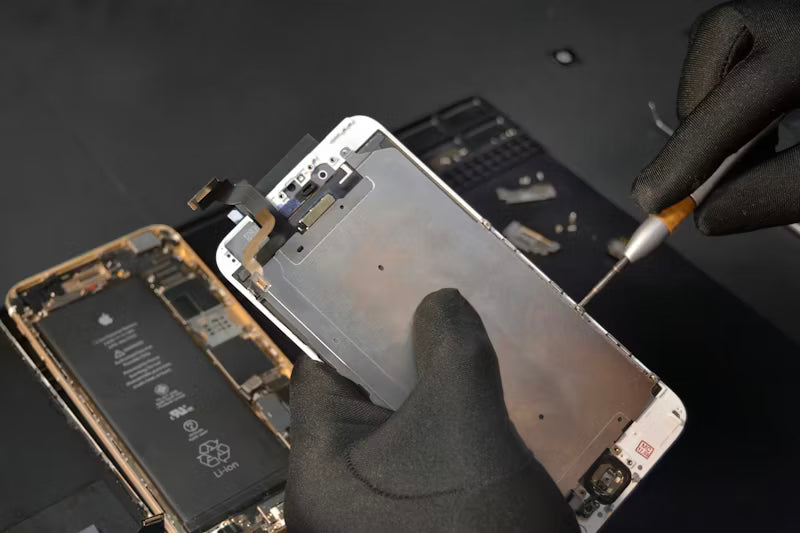
A certified retailer starts from the opposite end. Every device is inspected against a fixed process before it's ever listed — checking things like battery health, screen condition, button function, cameras, and connectivity — and assigned a clear grade (A, B or C) based on what that inspection finds. Battery health is tested and disclosed upfront on the listing, not left to a seller's description.
Prices are typically higher than the cheapest Carousell listings for the same model, because that inspection, grading, and disclosure has a cost baked in. What you're paying for is certainty: the condition described on the page is the condition you receive, verified before the sale rather than discovered after it.
Key differences: grading, returns, recourse
The three things that separate these two routes are grading, returns, and recourse — and they compound on each other.
Grading is the foundation. A certified retailer's A/B/C system means the same grade means the same thing on every listing, checked against a fixed standard. On Carousell, "good condition" is subjective and varies seller to seller, with no consistent baseline to compare against.
Returns follow directly from that. A certified retailer with confidence in its grading can offer a real return window, because the condition was verified before listing. A private Carousell sale is typically final the moment cash changes hands — there's no structure for a seller to take a phone back, and most don't.
Recourse is what happens when something's wrong. With a certified retailer, you're dealing with a business that has a return process and a support channel. With a Carousell seller, you're negotiating with an individual who may or may not respond, and who has no obligation to resolve anything once the sale is done.
None of this means Carousell is unsafe by definition — plenty of transactions go fine. It means the retailer route is designed to remove these risks upfront, while the marketplace route asks you to manage them yourself.
When informal channels make sense
Carousell tends to make the most sense for buyers who know precisely what they're looking for, know how to verify a device themselves (IMEI, battery health, screen and button checks), and are comfortable with a final sale if something turns out different from the listing. It's also a reasonable route for older, lower-value devices where the cost of a mismatch is small, or when you're after a specific configuration a certified retailer simply doesn't have in stock that week.
What to look for in a retailer
If you're leaning toward a certified retailer, a few things separate a genuinely graded seller from one borrowing the language without the process behind it. Look for a clear, published grading system — A, B or C, not vague marketing terms — with the grade shown on every listing. Battery health should be stated as an exact percentage, not a description. There should be a defined return window stated upfront, not something you have to ask about. And stock should be visibly current, with real photos of the specific unit or a clear note when a listing photo is representative rather than the exact device.
Frequently asked questions
Is it cheaper to buy refurbished tech on Carousell than from a certified retailer?
Often, yes, on sticker price — Carousell listings typically undercut certified retailers for the same model since there's no grading or inspection cost built in. The trade-off is that you're taking on the verification work yourself.
Can I return a phone bought on Carousell if it's not as described?
Generally no. Most Carousell sales are final once payment is made, and there's no structured return process — any resolution depends entirely on the individual seller's willingness to cooperate.
What does "Grade A, B or C" mean when buying refurbished tech?
Grade A is closest to new condition with minimal cosmetic wear. Grade B shows light, visible use. Grade C has more noticeable wear and is sold as-is, without return eligibility.
Is Carousell safe for buying a refurbished phone?
It can be, particularly for buyers who know how to check IMEI status, battery health, and physical condition themselves before paying. The risk is that verification is entirely on you, with limited recourse afterward.
What should I always check before buying refurbished tech from any seller?
IMEI status, battery health percentage, screen and button condition, camera function, and connectivity — regardless of whether you're buying from a marketplace or a retailer.
Why do certified retailers cost more than Carousell listings for the same model?
The price difference reflects inspection, grading, battery testing, and a return window — work and guarantees a private seller isn't providing.
About Tech Pasar
Tech Pasar is Singapore's certified refurbished tech retailer. Every device we sell is inspected, battery-tested, and graded A, B or C before it's listed — with the grade and battery percentage shown clearly on every product page, and a defined return window behind every sale.
We built Tech Pasar for buyers who want the value of refurbished tech without doing the verification work themselves. Browse current stock to see what's graded and ready this week.